Choosing a Pilates Reformer manufacturer involves more than comparing frame finishes or prices. Buyers need to assess carriage glide, spring consistency, adjustability, service support, and replacement-part access. These details matter in a busy studio, where equipment may be used throughout the day. Small differences become noticeable.
Demand is growing, but the available evidence needs careful interpretation. ClassPass’s 2024 Look Back Report named Pilates the most-booked workout globally for the second consecutive year and reported an 84% rise in Pilates bookings. That is a useful signal of consumer interest, not a measure of Reformer sales or factory quality. The distinction matters. Buyers should treat market trends as context, then verify specifications, warranties, and service arrangements directly with manufacturers.
The guiding principle comes from Joseph Pilates, the method’s founder: “Physical fitness is the first requisite of happiness.” His words do not rank equipment brands, of course. They do remind buyers that a machine should support consistent, controlled movement. This guide compares ten Reformer manufacturers for global buyers, focusing on product range, construction, customization, and practical purchasing considerations. No single brand suits every studio. A polished showroom model may still be wrong for a compact space or a demanding class schedule. That is worth reflecting on before placing an order.
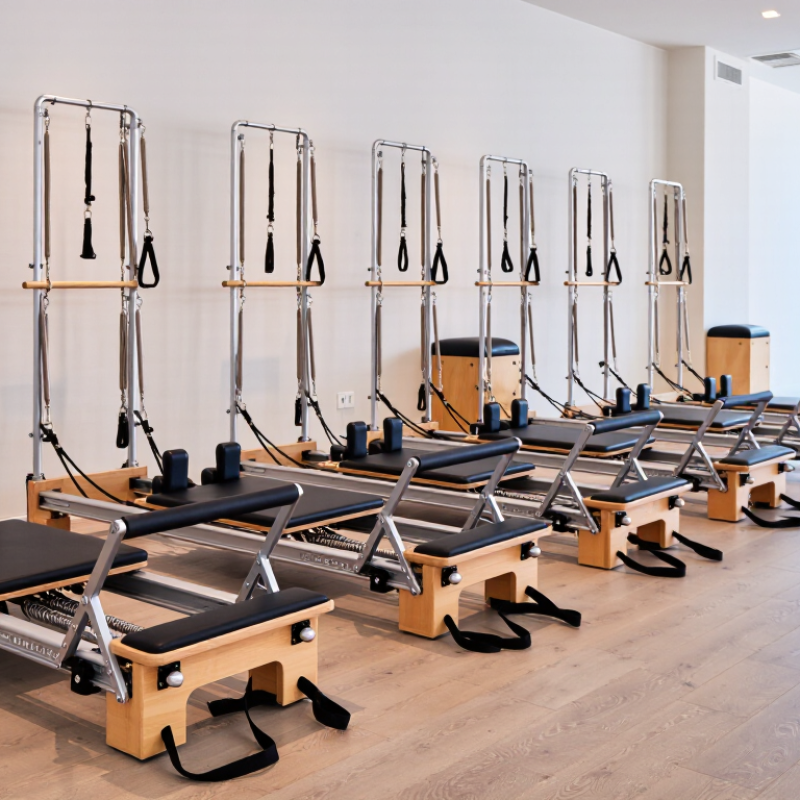
A Pilates reformer is a training bed with a padded carriage that moves along a frame. The user sits, lies, kneels, or stands on the carriage while performing controlled movements. A footbar provides a surface to push against, and adjustable straps connect to pulleys for arm and leg exercises. It moves.
Springs attach the carriage to the frame and create resistance. Adding or removing springs changes how much force a movement requires, though more resistance does not always mean a better workout. The carriage may also shift as the user moves, so balance and control matter. In a rowing-style exercise, for example, the legs press the carriage away before the arms draw the straps inward. Smooth motion depends on steady effort, not momentum.
Reformers can support strength, mobility, and coordination work, but the machine does not correct technique by itself. A qualified instructor can adjust spring settings and teach safe positioning, especially for beginners or people returning after an injury. Buyers should check carriage travel, frame stability, strap adjustment, and the ease of changing springs. Details matter. Even a quiet machine can feel awkward if its dimensions do not suit the user or available space. Reformer design varies, and specifications alone cannot show how naturally a particular model moves.
A Pilates reformer uses springs to resist or assist carriage movement. This chart illustrates Hooke’s law for an idealized spring with a stiffness of 100 N/m: force increases in proportion to extension. The extension values are illustrative, not specifications for any particular reformer. Real spring resistance varies with spring stiffness, preload, extension, and equipment setup.
Choosing a Pilates reformer manufacturer requires more than comparing prices and product photos. Ask for frame dimensions, maximum user weight, spring configurations, and written test procedures. These details help buyers compare equipment on equal terms. A polished finish is useful, but it cannot prove that a frame stays stable during repeated use.
Inspect the carriage, rails, footbar, and moving joints on a sample unit. The carriage should travel smoothly without obvious side-to-side movement, while springs should attach securely and show clear resistance ratings. Ask how the manufacturer checks welds, alignment, and upholstery before shipment. Documentation matters. It should identify materials, inspection steps, and replacement-part availability. Claims without records deserve follow-up.
Production consistency can be harder to judge than one good sample. Request references from buyers with similar order sizes, and compare sample equipment with later production units. Ask about lead times, packaging, warranty coverage, and service response times in writing. A factory visit or independent inspection can reveal practical details, such as crowded storage or inconsistent labeling. Not every small flaw signals poor quality, but repeated defects are meaningful. Buyers should also consider whether spare springs and straps can be supplied over time. A low quote may still be reasonable; it simply needs evidence behind it.
A practical comparison framework for assessing manufacturers. The criteria below are not a ranking of specific companies; buyers should verify claims against current product documents and local requirements.
| No. | Evaluation criterion | What to verify | Evidence to request | Why it matters to global buyers |
|---|---|---|---|---|
| 1 | Frame construction and materials | Frame material, joint and fastener design, finish, corrosion protection, and stated user-weight capacity. | Technical drawings, material specifications, rated-load documentation, and care instructions. | Material and construction affect stability, durability, maintenance, and suitability for the intended studio or home environment. |
| 2 | Carriage, rails, and rolling performance | Carriage dimensions, rail design, wheel or bearing arrangement, travel range, and ease of adjustment. | Product specifications, assembly manual, and an in-person or recorded demonstration across the carriage’s range of motion. | Smooth, consistent carriage travel supports controlled movement; accessible components can make inspection and servicing easier. |
| 3 | Spring system and resistance options | Spring types, available resistance combinations, attachment points, replacement availability, and inspection guidance. | Spring specifications, user instructions, replacement-part list, and documented inspection or replacement guidance. | Clear resistance options and maintenance guidance help instructors plan workouts and identify worn components safely. |
| 4 | Adjustability and user fit | Footbar positions, rope or strap adjustment, headrest settings, shoulder-rest design, and available carriage configurations. | Adjustment diagrams, dimensional drawings, and a demonstration of setup changes for different users and exercises. | Adjustability helps accommodate different body sizes, training needs, and exercise setups. |
| 5 | Quality control and product testing | How incoming materials, assembly, finished products, and functional performance are checked; whether test criteria are documented. | Quality-control procedures, sample inspection records, and test reports that identify the tested model and method. | Documented processes make it easier to evaluate consistency between units and clarify what checks were actually performed. |
| 6 | Safety information and applicable compliance | Warnings, assembly and use instructions, risk information, and requirements applicable in the destination market. | Current manuals and applicable conformity or test documents, with the product model and issuing party clearly identified. | Requirements vary by market and product. Buyers should confirm local obligations rather than assume one certificate applies everywhere. |
| 7 | Warranty and after-sales support | Coverage period by component, exclusions, claim process, service response, and responsibility for labor or transport costs. | Written warranty terms, service contact details, and a description of the process for reporting and resolving defects. | Clear terms help buyers estimate ownership costs and understand how support works across borders. |
| 8 | Spare parts and maintenance | Availability of springs, straps, ropes, wheels, upholstery, and other service parts; ordering process and compatibility information. | Parts catalogue, maintenance schedule, ordering details, and confirmation of how parts are identified by model. | Access to compatible parts can reduce downtime and make routine upkeep more manageable. |
| 9 | Shipping, packaging, and installation | Product dimensions and weight, packaging protection, shipping terms, delivery scope, assembly needs, and installation support. | Packing list, crate or carton dimensions, assembly instructions, and a written quotation specifying the agreed delivery terms. | Accurate logistics details help buyers plan freight, receiving access, storage, installation, and landed costs. |
| 10 | Customization and production communication | Available options, minimum order quantities, lead-time estimates, sample approval process, and how design changes are documented. | Written specification, approved drawings or finish samples, production schedule, and change-control records. | Written specifications reduce the risk of mismatched expectations when placing customized or multi-unit orders. |
For global buyers, choosing a Pilates reformer manufacturer is a technical decision, not just a price comparison. The Global Wellness Institute’s 2024 Global Wellness Economy Monitor valued the wellness economy at $6.3 trillion in 2023 and projected $9 trillion by 2028. That figure signals a broad opportunity, but it is not a reformer-sales forecast. Buyers still need evidence from the factory floor.
Inspect the carriage travel, rail alignment, upholstery seams, and spring attachment points. Ask for written details on materials, load testing, warranty coverage, and spare-part availability. A reformer that glides smoothly in a showroom may behave differently after repeated commercial use. Request a sample unit or documented quality checks, and confirm how replacement springs and wheels can be ordered across borders. Small parts matter.
Compare production capacity with realistic delivery schedules, not optimistic promises. The International Organization for Standardization’s ISO 20957-1 provides general safety requirements for stationary training equipment; buyers can ask how a supplier addresses relevant requirements. It does not replace product-specific testing. Packaging also deserves attention: measure the packed unit, check protection around rails, and confirm assembly instructions are clear. That sounds tidy. Real shipments are messier, and even experienced buyers can overlook local service access when focusing on unit cost.
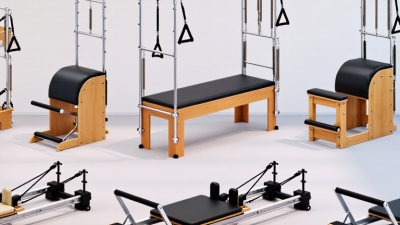
A manufacturer’s product range matters when a studio needs more than one standard reformer. Compare available frame lengths, carriage widths, spring resistance options, and adjustments for different user heights. Some suppliers also offer tower attachments, jump boards, and replacement parts. Useful breadth is not the same as a crowded catalog. Buyers should check whether key components remain compatible across models.
Quality is easier to assess through details than polished product photos. Look for stable frames, smooth carriage travel, secure footbars, and springs with clearly specified resistance. Ask how materials are inspected and whether production batches undergo load and movement checks. Small details count: a rail that rattles during a slow glide can disrupt a session. Warranty terms and access to spare parts also reveal how practical long-term support may be.
A sample unit can expose issues a specification sheet misses. Test transitions, listen for uneven wheel noise, and check whether straps adjust without slipping. Still, no checklist is perfect. A heavier frame may feel reassuring, yet add shipping and installation demands. Compare specifications against the studio’s class format, available floor space, and expected daily use. Manufacturers vary in customization, finish consistency, and documentation, so request the same information from each before judging quality.
For global buyers comparing Pilates reformer manufacturers, a low unit price can hide costly gaps in freight planning and service. Ask for the packed dimensions, gross weight, pallet configuration, and parts list before approving a shipment. These details help freight forwarders estimate handling and delivery costs more accurately. UNCTAD’s Review of Maritime Transport 2024 reported that maritime trade grew 2.4% in 2023, while disruptions continued to affect routes and costs. A shipping estimate is not a delivery guarantee. Confirm the named delivery point, insurance coverage, customs paperwork responsibilities, and who pays for storage if cargo is delayed.
After-sales support deserves the same scrutiny as the frame and upholstery. Request a written warranty, response-time target, troubleshooting guide, and clear process for ordering replacement cables, wheels, or upholstery. Small parts matter. The World Bank’s 2023 Logistics Performance Index assesses 139 economies on factors including customs, logistics services, tracking, and timeliness. Use those measures to assess the destination market, but also check whether the supplier can provide serial-number records and remote setup guidance. Ask for a real service example, with customer details removed. A polished promise can still leave a buyer waiting weeks for one cable. That risk is easy to overlook.