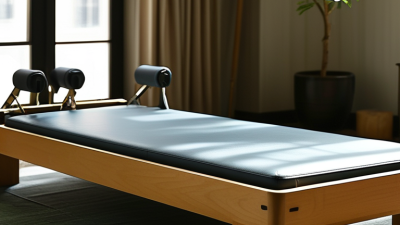
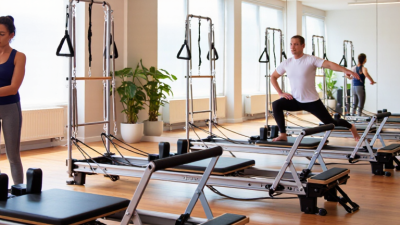
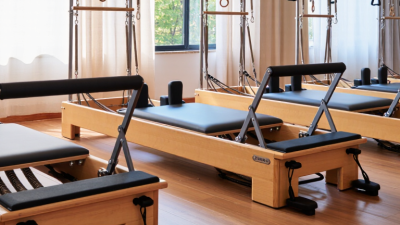
Choosing Pilates Barrels for a business is not just a matter of picking attractive equipment. The right barrel must suit your clients, instructors, room layout, and maintenance capacity. ClassPass’s 2024 Look Back report named Pilates its most-booked workout for the second consecutive year. That platform data signals strong interest, but it does not measure the entire fitness market or prove demand for barrels specifically.
Joseph H. Pilates wrote, “A few well-designed movements, properly performed in a balanced sequence, are worth hours of sloppy calisthenics or forced contortion.” His principle offers a useful lens for equipment choices: a barrel should support controlled movement, not simply fill studio space. Consider the spine corrector, ladder barrel, and arc barrel separately. Their curves, support, footprint, and exercise range differ. So do the needs of a beginner class and a rehabilitation-focused session.
Small details matter. Check upholstery seams, frame stability, grip, and how easily staff can clean each surface. Measure doorways and storage areas before ordering; a barrel that barely fits may become a daily frustration. Ask suppliers for load specifications, warranty terms, replacement-part access, and care instructions. Where possible, test the equipment with instructors and clients before committing. A polished catalogue photo tells you little about comfort after a full class.
There is no widely accepted public dataset measuring the Pilates-barrel market alone. Be cautious with broad market claims. This guide compares practical selection criteria so your business can choose equipment that fits its real clients, budget, and space—not just a trend.
Assess Your Business Needs and Clientele
A Pilates barrel should fit the way your studio teaches, not just its floor plan. List the sessions you offer, how many clients attend, and who they are. A rehabilitation-focused practice may need a stable, supportive barrel with accessible positioning. A group studio serving experienced clients might prioritize versatile equipment that accommodates varied exercises. Ask instructors which movements clients struggle with, and check the available storage space before comparing models. Try a sample session if possible. Small details matter.
Consider client size, mobility, and experience. A barrel that feels comfortable for one person may feel restrictive to another. Look for clear setup guidance and surfaces that are easy to clean between sessions. Also consider how often the equipment will be used; daily group classes place different demands on a barrel than occasional private lessons. In practice, usage estimates are rarely perfect. Review them after a few weeks, and adjust your purchasing plan rather than ordering too many units upfront.
Tips: Ask a few regular clients to test the shape and height. Note where they need extra support, and whether instructors can reposition the barrel without interrupting class. Record feedback, even when it is mixed.
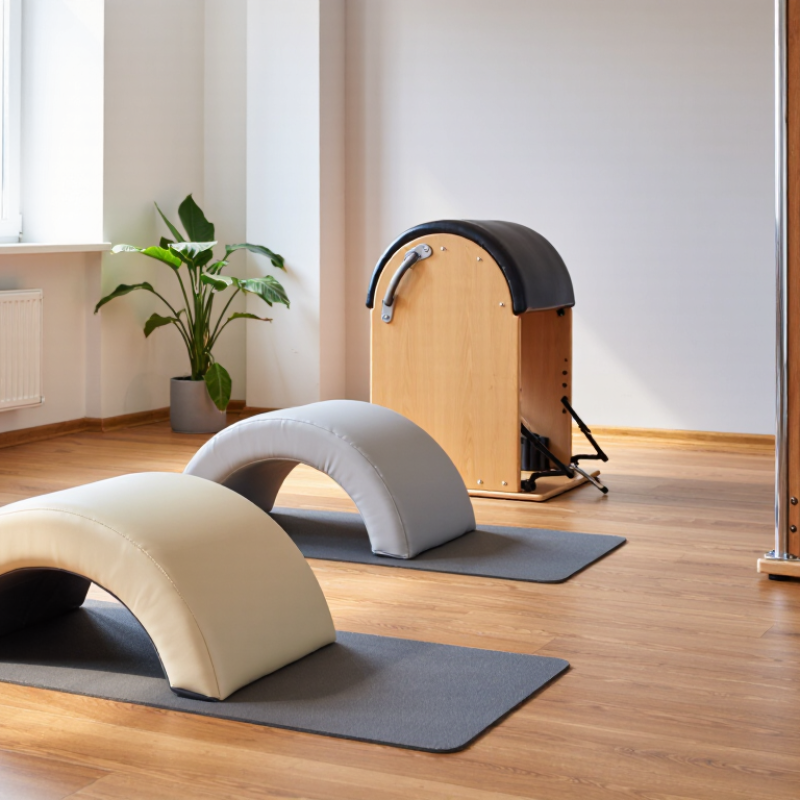
Choosing the right Pilates barrel starts with the exercises your clients actually need. A spine corrector supports spinal articulation, chest opening, and controlled abdominal work. Its compact footprint suits small studios, though its lower height limits some positioning options. A ladder barrel offers a higher, adjustable surface for side bends, back extension, and hamstring mobility. It needs more floor space and careful supervision. The smaller arc barrel is easy to move between stations and can support beginner-friendly mobility drills. Still, it may feel too low for clients who need more support.
A 2024 global fitness-class booking report found Pilates was the most-booked workout for a second year, with bookings up 66% year over year. That reflects one booking platform, not the entire market. For a business, it suggests interest in Pilates, but not a guaranteed return on equipment.
Compare barrel height, adjustment range, padding, and weight capacity against your class format and client mix. A tidy specification sheet cannot show how a barrel feels during a real session.
Tips: Measure the working space, not just the storage footprint. Test entry and exit movements with different body sizes. Test before buying. The ideal model may still be the wrong fit for a particular studio.
Choosing a Pilates barrel for a business starts with the clients and space it must serve. Measure the available floor area, including room for instructors to move around the equipment. Check the barrel’s dimensions against your tallest and shortest regular users. A unit that fits the room may still feel cramped during a standing stretch.
Adjustability matters across mixed classes. Look for clear settings that change the curve or support position without tools, if possible. Test each setting with controlled movements, and note whether the barrel shifts or pinches clothing. Simple adjustments save time. They also help instructors adapt exercises to different mobility levels. Still, more settings are not always better; complicated mechanisms can slow a busy session.
Safety details deserve close attention. Check for a stable base, grippy contact points, smooth edges, and hardware that stays secure under normal use. Ask the supplier for a stated weight capacity and care instructions, then record routine checks for loose fittings, worn padding, or cracks. Small defects can be easy to overlook. That is a real risk in shared studios. A hands-on trial is useful, but one short test cannot predict years of daily use.
When comparing Pilates barrels for a studio, inspect the frame, joints, upholstery seams, and ladder connection. Press the foam and check whether it regains its shape evenly. Small cracks matter. The Health & Fitness Association’s 2024 U.S. Health & Fitness Consumer Report counted 72.9 million health-club members in 2023. Frequent use makes durability an operating concern, not just a cosmetic preference.
Maintenance should be realistic for your staff. Ask which cleaners are suitable, since harsh products may damage upholstery or leave residue. Wipe surfaces after sessions, dry seams, and record visible wear during routine checks. Keep the inspection log. It can help identify repeated loosening or foam compression, although a log cannot replace hands-on assessment.
Read warranty terms before ordering. Confirm whether commercial studio use is covered, how long the frame and upholstery are protected, and who pays for shipping, labor, or replacement parts. Ask what documentation is required for a claim. A long warranty may look reassuring, but exclusions can narrow its value. I would compare response times and parts availability, too; those details are easy to overlook when a barrel is still new.
Choosing the best Pilates barrels means balancing purchase cost, usable floor space, and dependable supplier support. The Global Wellness Institute’s 2024 Global Wellness Economy Monitor estimated the wellness economy at $6.3 trillion in 2023. That broad figure suggests a large wellness market, not guaranteed demand for your studio’s equipment. IHRSA’s 2023 Global Report counted 72.6 million U.S. health-club members in 2022. Again, this is context, not a sales forecast. Check local class bookings before ordering several units.
Measure the barrel’s footprint and the clearance clients need to move safely around it. Sketch its position beside reformers, walkways, and storage; a few inches can disrupt a busy class. Compare total costs, including delivery, assembly, replacement upholstery, and likely downtime. The lowest quote may not stay lowest. Ask suppliers for written warranty terms, spare-part availability, setup guidance, and realistic lead times. Request dimensions and weight limits, then confirm they suit your clients and teaching style. Small studios may favor compact models, while varied classes may need different barrel sizes. That trade-off is easy to underestimate. A responsive supplier can help, but vague answers about repairs are a warning sign. My choice would still depend on trial use; catalog photos rarely show how awkward a barrel feels to move between sessions.
Use these approximate planning ranges to compare common Pilates barrel types. Prices and dimensions vary by materials, construction, region, and configuration; request current specifications and quotes before purchasing.
| Barrel Type | Approximate Purchase Price (USD) | Typical Approximate Footprint | Best Fit for a Business | Space and Capacity Considerations | Supplier Support to Check | Practical Buying Guidance |
|---|---|---|---|---|---|---|
| Pilates Arc / Small Barrel | $80–$250 per unit | About 24–36 in. long × 14–20 in. wide | Studios adding lower-cost props for mat classes, mobility work, and individual or small-group sessions. | Compact and often easy to store on shelving. Allow additional clear floor space for clients to move safely around the prop. | Confirm cleaning instructions, material specifications, replacement options, and whether the supplier can provide multiple units in matching sizes. | A practical starting point when budget and storage are priorities. Check that the curve and size suit the exercises planned by your instructors. |
| Spine Corrector | $250–$700 per unit | About 28–36 in. long × 20–28 in. wide | Studios offering apparatus-based sessions or focused spinal mobility, extension, and abdominal work. | Requires more storage space than a small arc. Check the unit’s height and weight as well as its floor footprint. | Ask about warranty coverage, delivery protection, assembly requirements, weight limits, and access to product guidance for instructors. | Compare padding, stability, and dimensions in person or through detailed product specifications; these can affect comfort and usability. |
| Ladder Barrel | $600–$1,500 per unit | About 48–60 in. long × 24–32 in. wide | Established studios with private or semi-private apparatus sessions and instructors trained to use ladder barrels. | Needs a dedicated position and clear working area. Measure doorways, routes into the studio, and storage access before ordering. | Verify delivery method, assembly service, warranty terms, replacement parts, service response process, and the supplier’s written maintenance guidance. | Consider the higher purchase and space commitment against expected booking demand and the range of sessions you can offer. |
| Adjustable or Combination Barrel | $500–$1,400 per unit | About 36–60 in. long × 22–32 in. wide, depending on configuration | Businesses that need adaptable equipment for different clients, instructors, or class formats. | Measure the largest setup configuration, not only the stored position. Allow room to adjust and reposition the equipment. | Ask for adjustment instructions, parts availability, compatibility details, warranty exclusions, and support for setup and maintenance. | Flexibility may be useful, but confirm that adjustments are straightforward and that the equipment remains stable in each intended setting. |
| Multi-Unit Starter Mix | Budget according to the chosen models; request an itemized quote for the full set. | Depends on the mix. Plan storage for every unit and working clearance for the largest item. | New or expanding studios testing client demand across mat, small-group, and apparatus sessions. | Map storage and active-use zones before purchase. Avoid relying on product footprints alone when estimating usable studio capacity. | Request consolidated shipping details, lead times, an itemized warranty summary, and a single point of contact for order issues. | Start with the equipment your class schedule can use consistently; expand after tracking utilization, maintenance, and client demand. |
Planning note: Price ranges and footprint figures are broad estimates for comparison, not fixed market quotations or safety standards. Confirm exact dimensions, load limits, materials, delivery costs, warranty conditions, and required clearances with the supplier and a qualified instructor before purchase.