The global Pilates equipment market is expanding, and the Pilates Chair is gaining attention beyond boutique studios. ClassPass’s 2024 Look Back report identified Pilates as the most-booked workout worldwide. Its findings reflect growing demand for controlled, low-impact training with adaptable resistance. This trend matters to importers, distributors, and studio owners comparing international manufacturers.
Market estimates vary considerably. Grand View Research reports strong growth across the broader yoga and Pilates studio sector, while equipment-focused studies from firms such as Mordor Intelligence show different market boundaries and revenue figures. These differences deserve caution. No single report measures every chair, supplier, or regional sales channel. Still, the direction is clear.
A reliable Pilates Chair manufacturer must offer more than attractive upholstery. Buyers should examine frame materials, spring quality, pedal alignment, load testing, replacement parts, and documented quality controls. ISO 20957-1 provides a useful reference for stationary training equipment safety, although buyers should confirm how its requirements apply to each product. Details become practical during daily use: a stable base on a studio floor, quiet springs during footwork, and a pedal that returns evenly.
Experience reveals the gaps.
The strongest manufacturers usually explain tolerances, maintenance intervals, packaging protection, and warranty procedures. They also provide traceable specifications instead of vague claims. Global buyers should compare factory audits, sample performance, certifications, lead times, and after-sales support. Price alone can mislead. A cheaper chair may create higher costs through damaged shipments, inconsistent resistance, or unavailable parts. This guide evaluates leading Pilates Chair manufacturers through a balanced lens, recognizing that supplier rankings can change with region, order volume, and verification quality.
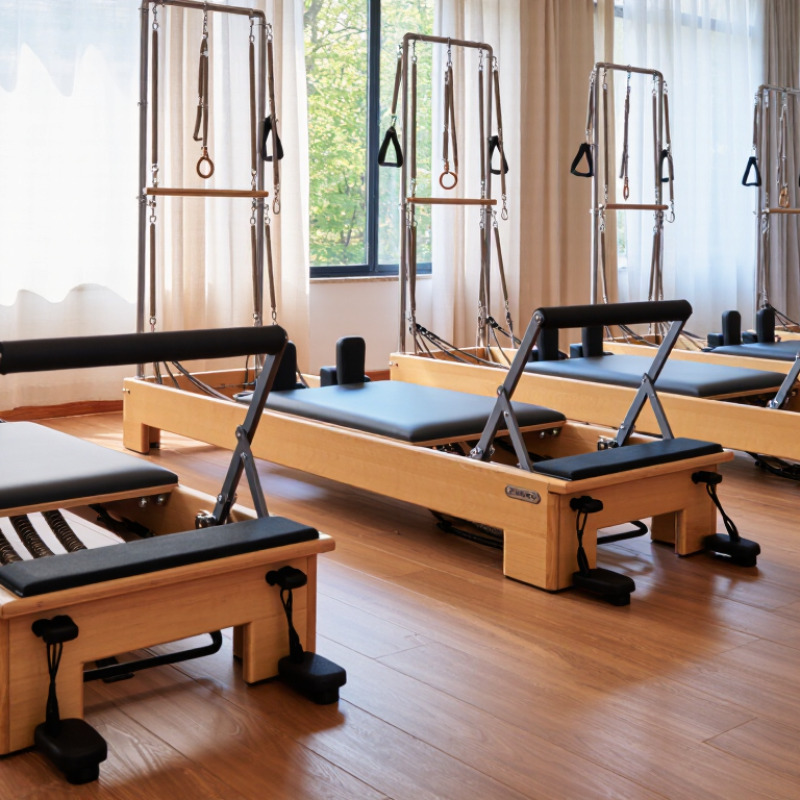
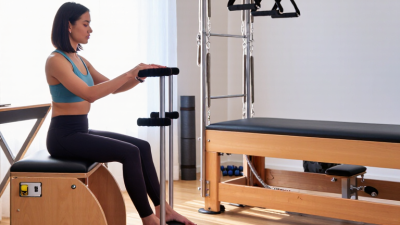
Pilates chairs are compact resistance machines, but their designs serve different training goals. The classic split-pedal chair supports seated presses, standing balance work, and controlled single-leg exercises. It suits studios with limited floor space. A ladder-barrel chair adds a curved surface for spinal extension, mobility, and posture-focused work. It needs more clearance. A stability chair uses springs, handles, or adjustable resistance for rehabilitation-style movements and progressive strength training.
The main use depends on the client and instructor. Split-pedal models challenge hip control, ankle stability, and core coordination. They can feel demanding quickly. Ladder-barrel models help users explore thoracic mobility and gentle stretching, though beginners may need close supervision. Stability chairs offer more adjustable resistance for older adults, athletes, and post-injury programs. The American College of Sports Medicine’s 2024 fitness trends survey continued to emphasize functional training and older-adult exercise. That supports broader chair applications, but it does not prove every model suits every user.
Global buyers should compare frame welds, spring ratings, pedal spacing, upholstery density, and replacement-part access. The Global Wellness Institute reported a $6.3 trillion wellness economy in 2023, with further growth projected through 2028. Demand is expanding. Quality control still varies between factories. Buyers should request load testing, material specifications, and user instructions before ordering. A low price can hide costly maintenance. This is easy to overlook. Testing one sample with real instructors remains wiser than trusting catalog photographs.
The comparison uses a practical 1–5 suitability scale, where 5 indicates a strong emphasis. Wunda Chairs are commonly used for balance, core control, and strength work; Combo Chairs add broader resistance and exercise options; Electric Chairs are frequently selected for adjustable resistance and rehabilitation-oriented training; and Pilates Armchairs, sometimes called Baby Chairs, are designed for supported posture, mobility, and beginner-friendly exercises.
Choosing Pilates Chair Manufacturers requires more than comparing prices and product photos. Examine their manufacturing experience, technical documentation, and quality control process. Ask how they test frame strength, spring resistance, pedal alignment, and surface durability. A reliable manufacturer should provide clear specifications, inspection records, and consistent sample quality. Request one sample before placing a larger order. Small details matter.
Tips: Check the chair’s dimensions, weight capacity, padding density, and adjustment range. Confirm whether replacement springs, handles, and upholstery are available. Review packaging photographs and shipping protection. Ask about production timelines and communication during quality inspections. Visit the facility when possible, or arrange a credible third-party audit.
Look for evidence rather than confident promises. A factory may show modern equipment, yet its assembly records can remain unclear. That deserves a second question. Compare the sample with the final production agreement, including materials, colors, stitching, and tolerances. Also assess the manufacturer’s response to defects. Do they offer practical corrective action, or only polite explanations? This often reveals more than a polished website. No evaluation is perfect. A useful supplier is transparent when something goes wrong and willing to improve the process.
Leading Pilates Chair Manufacturers for Global Buyers
Leading Pilates chair manufacturers for global buyers combine stable engineering with practical studio experience. They understand that a chair must support controlled movement, repeated use, and different body types. A reliable design usually includes a firm seat, smooth pedal action, secure springs, and non-slip feet. Small details matter. Rounded edges improve comfort during extended sessions. Clear adjustment markings also reduce setup errors for instructors.
Professional manufacturers should explain their testing process, material choices, and quality controls. Buyers can request load-test results, production samples, and inspection records before placing large orders. Steel frames need consistent welding and corrosion-resistant finishing. Upholstery should resist sweat, cleaning agents, and daily abrasion. Spring tension must remain predictable over time. A serious supplier also provides assembly instructions, maintenance guidance, replacement parts, and responsive technical support. These details often reveal more than polished product photographs.
Global purchasing adds another layer of risk. Leading suppliers should offer protective export packaging, accurate dimensions, stable delivery schedules, and documents suited to the destination market. Ask about warranty coverage and the process for handling damaged components. No manufacturer gets everything right. Even an experienced factory may overlook packaging weaknesses or delay spare parts. That is why sample testing and independent inspection remain worthwhile. I would not choose only by price. A cheaper chair can create higher costs through repairs, shipping problems, or lost studio time. Reliable communication is equally important, especially when specifications cross languages and time zones.
| Evaluation Dimension | Common Market Reference | Recommended Buyer Requirement | Verification Method | Global Purchasing Consideration |
|---|---|---|---|---|
| Chair Configuration | Single-pedal, split-pedal, and combination chair designs are widely used in Pilates studios, rehabilitation centers, and home gyms. | Choose a split-pedal configuration when independent pedal movement and a broader exercise range are required. | Review technical drawings, operating photographs, and a physical sample where possible. | Confirm whether the pedal arrangement is suitable for the intended training method and user group. |
| Overall Product Size | Many compact Pilates chairs are approximately 55–75 cm wide, 55–75 cm deep, and 55–75 cm high, depending on the design. | Request exact assembled dimensions, folded dimensions if applicable, and the required clearance around the chair. | Compare approved engineering drawings with the installation area. | Accurate dimensions help calculate room capacity, pallet quantity, and container utilization. |
| Product Weight | Commercial Pilates chairs commonly weigh about 25–45 kg, depending on the frame, springs, upholstery, and hardware. | Balance structural stability with manageable handling requirements for installation and relocation. | Ask for net weight, gross shipping weight, and packaged dimensions. | Weight affects freight charges, unloading equipment, warehouse handling, and import cost. |
| Frame Construction | Common construction materials include powder-coated steel, stainless steel components, plywood, and solid hardwood. | Specify corrosion-resistant metal parts, reinforced joints, smooth edges, and a stable base. | Request material specifications, weld photographs, coating details, and load-test records. | Material selection should reflect climate, humidity, cleaning frequency, and commercial usage intensity. |
| Pedal Surface | Pedals are typically produced with wood, plywood, composite panels, or upholstered surfaces with an anti-slip finish. | Require a secure, non-slip surface with rounded edges and consistent pedal alignment. | Check surface finish, edge treatment, pedal movement, and fastener security during inspection. | Anti-slip performance is especially important in humid facilities and rehabilitation environments. |
| Spring System | Most Pilates chairs use replaceable resistance springs, often with multiple resistance levels. | Specify the number of springs, spring resistance options, attachment positions, and replacement availability. | Request spring specifications, cycle-test results, and replacement-part drawings. | Standardized replacement parts reduce downtime and simplify after-sales support across markets. |
| Adjustment Mechanism | Adjustment may include spring-hook positions, pedal height settings, handles, or removable support components. | Prioritize tool-free or low-tool adjustments with clear position markings and secure locking points. | Test adjustment smoothness, locking security, pinch-point protection, and repeatability. | Simple adjustment improves training efficiency and reduces operator errors in multi-user studios. |
| Upholstery | Common upholstery materials include vinyl, polyurethane-coated fabric, and other wipe-clean synthetic coverings. | Require durable, non-porous, easy-clean upholstery with reinforced seams and consistent padding. | Inspect seam quality, surface adhesion, padding recovery, and cleaning compatibility. | Confirm resistance to commonly used disinfectants before large-scale purchase. |
| User Load Rating | Load ratings vary by design and should not be inferred from appearance or product size. | Obtain a documented static and dynamic load rating suitable for the intended commercial application. | Review signed test reports, testing conditions, safety factors, and inspection records. | Load documentation supports safer procurement and may be required by commercial insurers or facility operators. |
| Safety Features | Important features include stable feet, rounded corners, secure spring attachments, controlled pedal travel, and protected pinch points. | Require a documented risk assessment and clear operating instructions in the target market language. | Conduct pre-shipment inspection and functional testing under representative conditions. | Safety documentation should be prepared for local workplace, consumer-product, or fitness-facility requirements. |
| Quality Management | Manufacturing controls may include incoming-material checks, in-process inspections, final assembly checks, and packaging inspections. | Use a written quality-control plan with measurable acceptance criteria and traceable inspection records. | Request inspection checklists, defect classifications, corrective-action records, and batch traceability. | Consistent quality controls are more valuable than relying only on product photographs or factory claims. |
| Packaging Protection | Export packaging commonly combines protective film, foam or molded inserts, reinforced cartons, and palletization. | Specify protection for corners, upholstery, pedals, springs, and adjustment hardware. | Review packaging drawings and perform drop, vibration, or simulated transport checks when appropriate. | Packaging must match the transport route, stacking method, humidity exposure, and destination warehouse conditions. |
| Documentation | Typical documents include user manuals, assembly instructions, packing lists, commercial invoices, and inspection reports. | Require complete technical files, spare-parts lists, maintenance instructions, and warranty terms. | Check document consistency with the actual production model and shipment configuration. | Accurate documentation simplifies customs clearance, staff training, maintenance, and resale support. |
| Spare Parts Support | Frequently replaced items may include springs, fasteners, foot pads, upholstery components, and adjustment hardware. | Request a recommended spare-parts package and defined replacement lead times. | Review part numbers, interchangeability, availability, and installation instructions. | Local or regional spare-parts availability can reduce service interruptions and total ownership cost. |
| Order and Delivery Planning | International purchases commonly involve sample approval, production scheduling, pre-shipment inspection, and consolidated freight planning. | Define minimum order quantity, lead time, payment milestones, inspection points, and delivery terms in writing. | Compare the purchase contract, approved sample, production schedule, and shipping documents. | Clear commercial terms help control currency exposure, freight changes, delays, and quality disputes. |
Reliable Pilates chair manufacturers should provide clear evidence of controlled production. Ask about frame welding, load testing, surface treatment, and final inspection records. A stable steel or aluminum frame should resist movement during repeated exercises. Wood components need smooth edges, consistent moisture control, and reinforced joints. Small details matter. Check the pedal hinges, springs, screws, and rubber feet closely. These parts often reveal production quality faster than polished photographs.
Material selection should match the buyer’s market and usage environment. High-density foam supports regular training without losing shape quickly. Durable vinyl or synthetic leather simplifies cleaning in studios. Powder-coated metal can improve resistance to scratches and moisture. Customization may include pedal color, upholstery, dimensions, logo placement, packaging, and spring strength. However, every change should be confirmed through technical drawings and samples. I have seen attractive prototypes fail because the final measurements changed slightly. No checklist is perfect. Independent inspections remain valuable.
Tips: Request a pre-production sample before placing a large order. Compare its dimensions with your training space and storage plan. Confirm packaging protection around corners, hinges, and upholstery. Ask for material specifications, test procedures, replacement-part support, and realistic production timelines. A dependable manufacturer answers directly and records changes carefully. When communication becomes vague, reconsider the order. Fancy promises are not manufacturing standards.
International purchasing requires more than comparing factory prices. Experienced buyers request drawings, material specifications, maximum user weight, and production lead times before placing an order. A Pilates chair should feel stable during repeated lateral movements, not only look polished in photographs. Ask manufacturers for factory inspection records, sample approval procedures, and recent quality-control data. Small details matter. Packaging does too.
Certification needs careful checking. The correct requirements depend on the destination market and the chair’s design. Buyers should request applicable test reports for frame strength, surface coatings, upholstery materials, and packaging safety. An ISO 9001 certificate may demonstrate a quality system, but it does not automatically prove product compliance. Verify the certificate number, issuing body, testing scope, and validity. Independent pre-shipment inspection can reveal loose bolts, uneven padding, or damaged cartons before export. I would not rely on a certificate copied into a sales brochure.
After-sales support often separates dependable suppliers from temporary sellers. Confirm the warranty period, excluded damage, replacement-part availability, and response time in writing. Ask whether the supplier can provide assembly videos, maintenance instructions, and remote troubleshooting for international customers. Keep spare springs, straps, screws, and protective feet available locally when possible. One weakness remains common: support promises may sound generous but lack measurable service terms. A practical agreement should identify contact channels, claim evidence, shipping responsibility, and repair timelines before payment. Test the process with a few questions. Their response is useful evidence.